木隠 Kogakure
Introduction
Before the chapters, 2 articles
- Preface
- Introduction
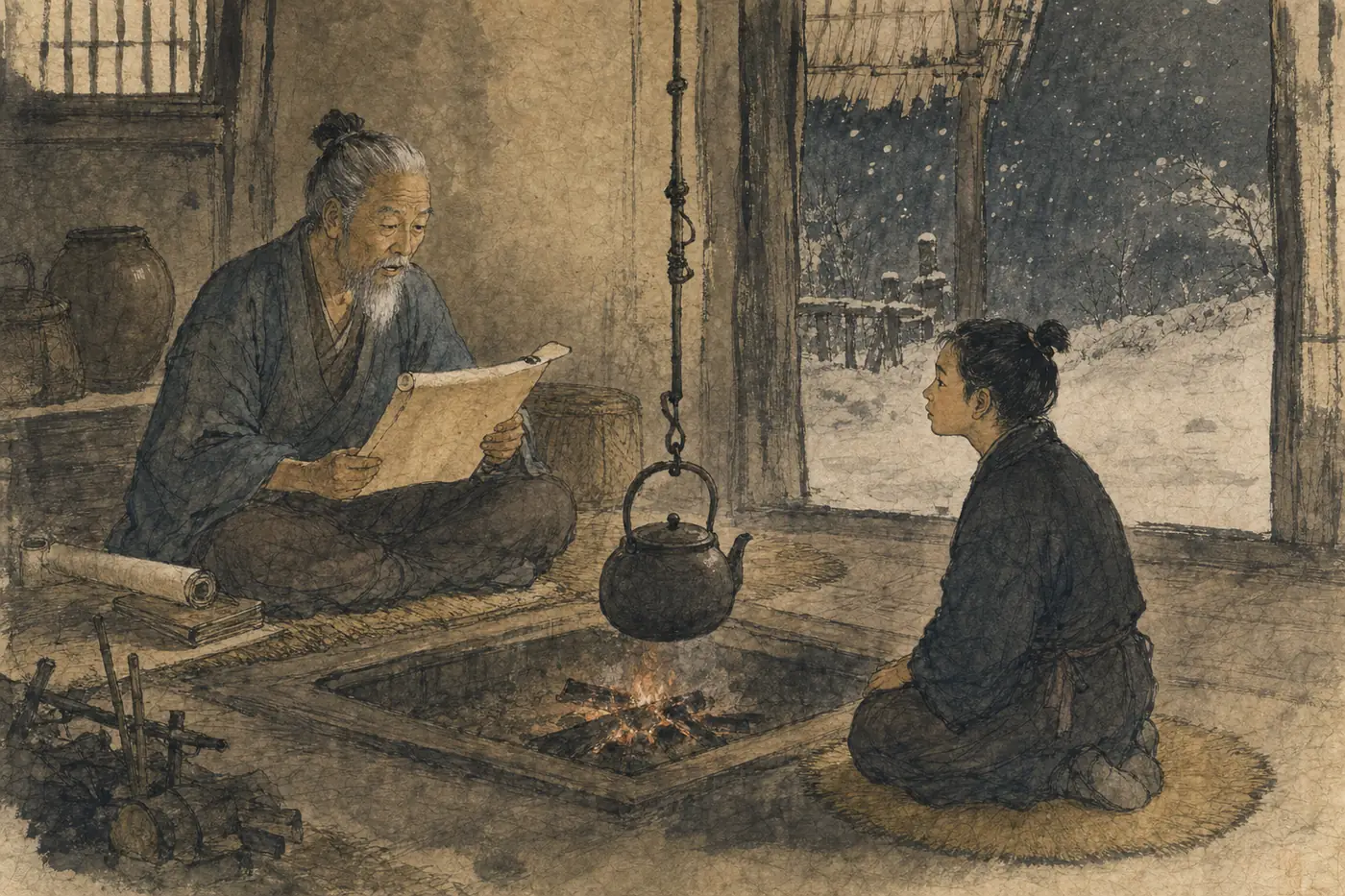
At its core, ninjutsu is about a free and just spirit. How historians and the media distorted the reputation of the ninja, and what the character 忍 reveals.
History
Chapter 1, 10 articles
- Origins of Ninjutsu
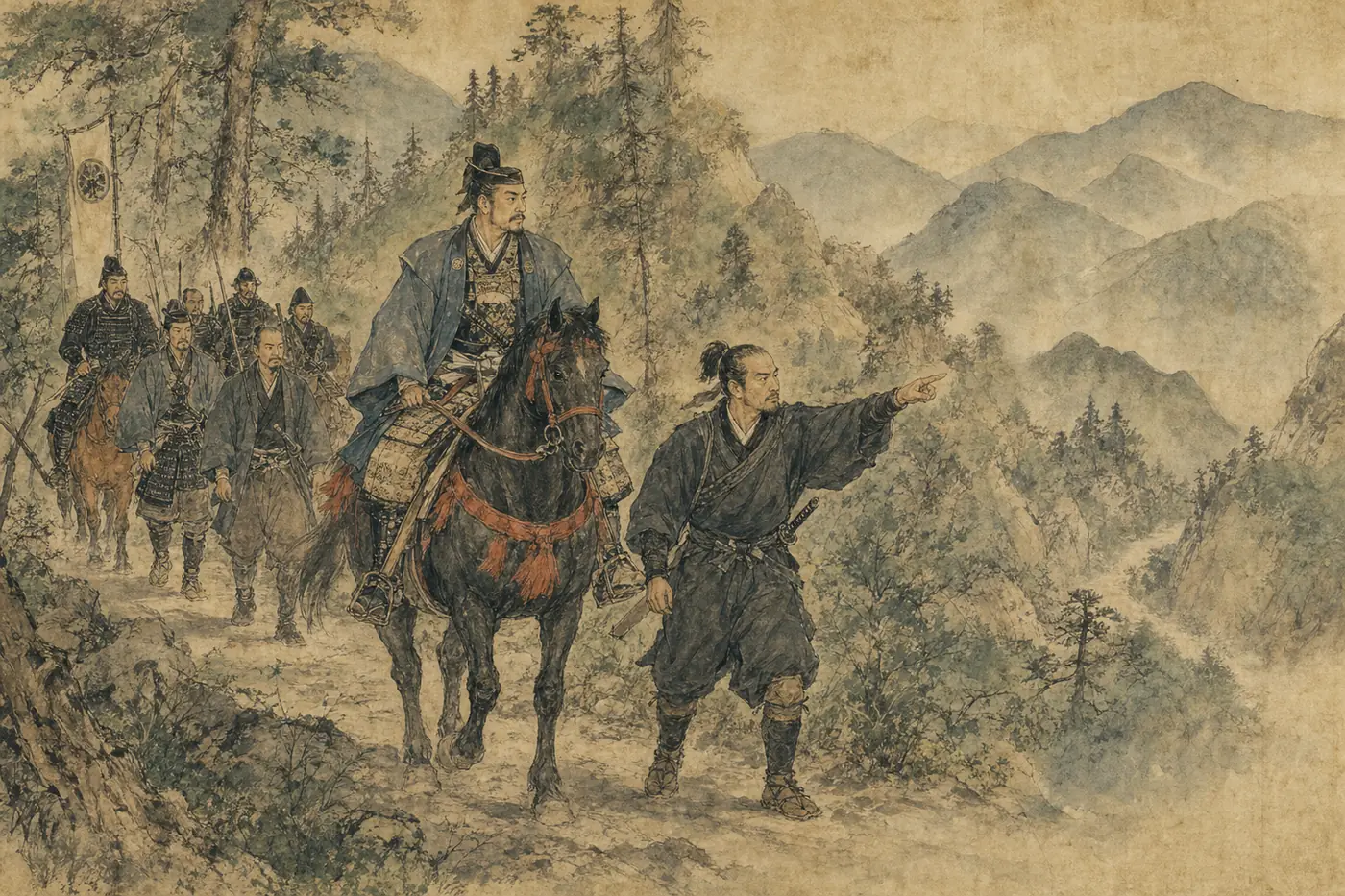
People believed forest spirits had taught the ninja. The roots of ninjutsu more likely lay in China, and over the centuries mountain ascetics gave way to spies.
- Emergence of the Ryū
For centuries Japan’s lords waged war on each other, and every one of them needed spies. In Iga and Kōga, dozens of ninja schools arose to meet the demand.
- Famous Ninja
Three families ruled Iga – the Hattori, Momochi and Fujibayashi. They produced Hattori Hanzō and Momochi Sandayū, the man who may have lived two lives.
- Ninja Biographies
A widow who trained orphan girls as spies, a sniper who missed Nobunaga, a master thief boiled in oil – ten ninja who made history.
- Iga-Ryū
Mountains on three sides, Kyōto close by, and a Chinese general on the run – how one of the oldest ninja traditions arose in Iga, and who passed it on.
- Kōga-Ryū
53 families, a commander who changed sides mid-battle, and ten scouts outside Hara Castle – the story of the Kōga-Ryū up to Fujita Seiko, probably its last heir.
- Iga no Ran
A castle built with the help of its enemies, and 12,000 men who attacked through three passes and failed – how Iga held out against Oda Nobunaga’s son Nobuo in 1579.
- Invasion of Iga
In 1581 Oda Nobunaga returned to Iga with more than 44,000 men on six routes. At Mount Hijiyama, the region’s last great uprising ended in fire.
- Demise
Peace ended the age of the ninja. Under the Tokugawa they became secret police, thieves, or gardeners – and in 1853 one of them was sent to sneak aboard Perry’s ships.
- Modern History
After World War II, the Americans largely banned the martial arts in Japan. The knowledge of the ninja survived anyway – through a night watchman, an adventurer in China, and his student Hatsumi.
Organization & Training
Chapter 2, 4 articles
- Organization of the Ryū
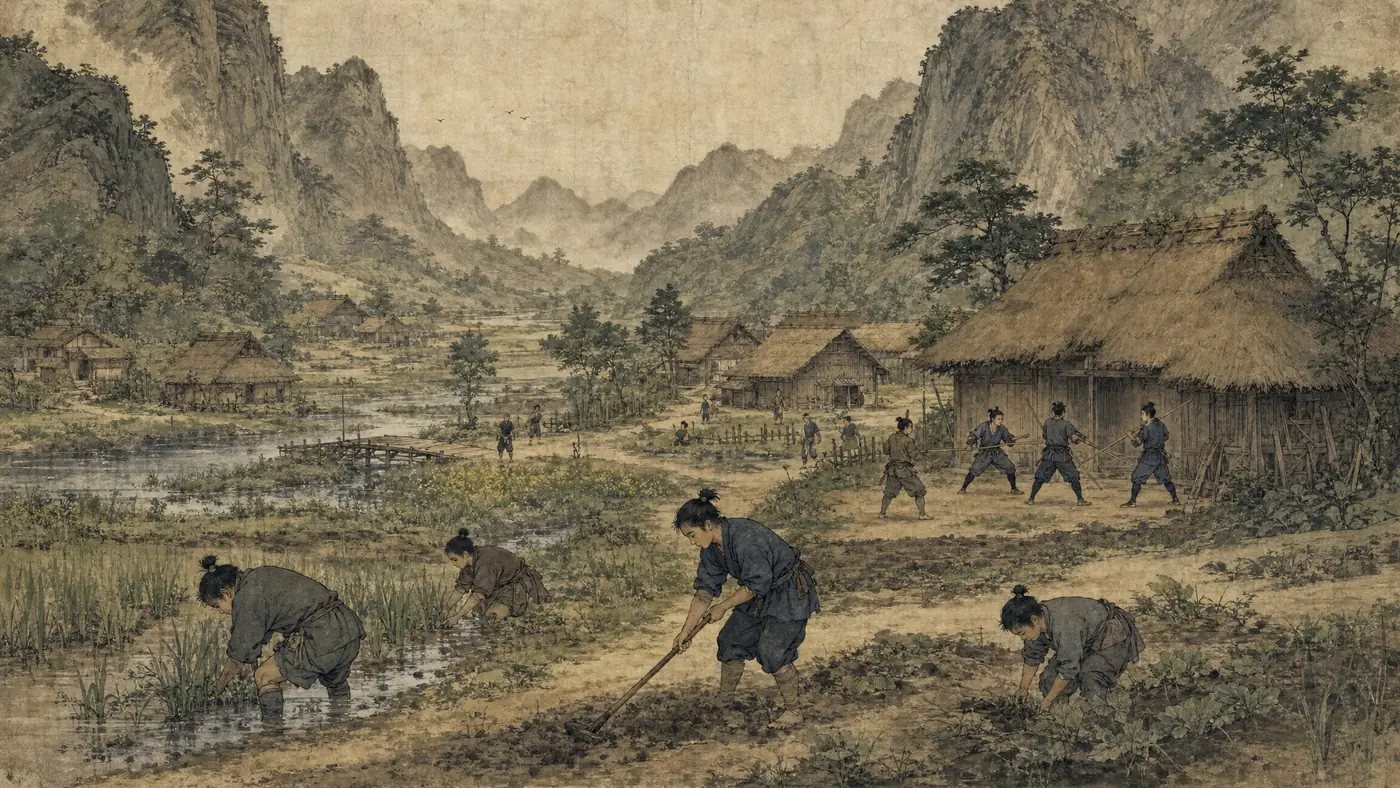
Even under torture, a ninja agent could not betray the leader. They didn’t know who he was. Three ranks guarded the Ryū against treachery – jōnin, chūnin, and genin.
- Training of the Ninja
Ninja were born, not made. At five or six their games turned into training; combat, acting, psychology, and the schooling of the mind followed later.
- Kunoichi
In 1561 Mochizuki Moritoki fell in battle. His widow Chiyome did not enter a convent. She built a network of female agents for Takeda Shingen, disguised as temple servants.
- Bansenshūkai
In 1676 Fujibayashi Yasutake gathered the knowledge of dozens of ninja Ryū from Iga and Kōga. Ten volumes on strategy, morals, deception, weather, and tools.
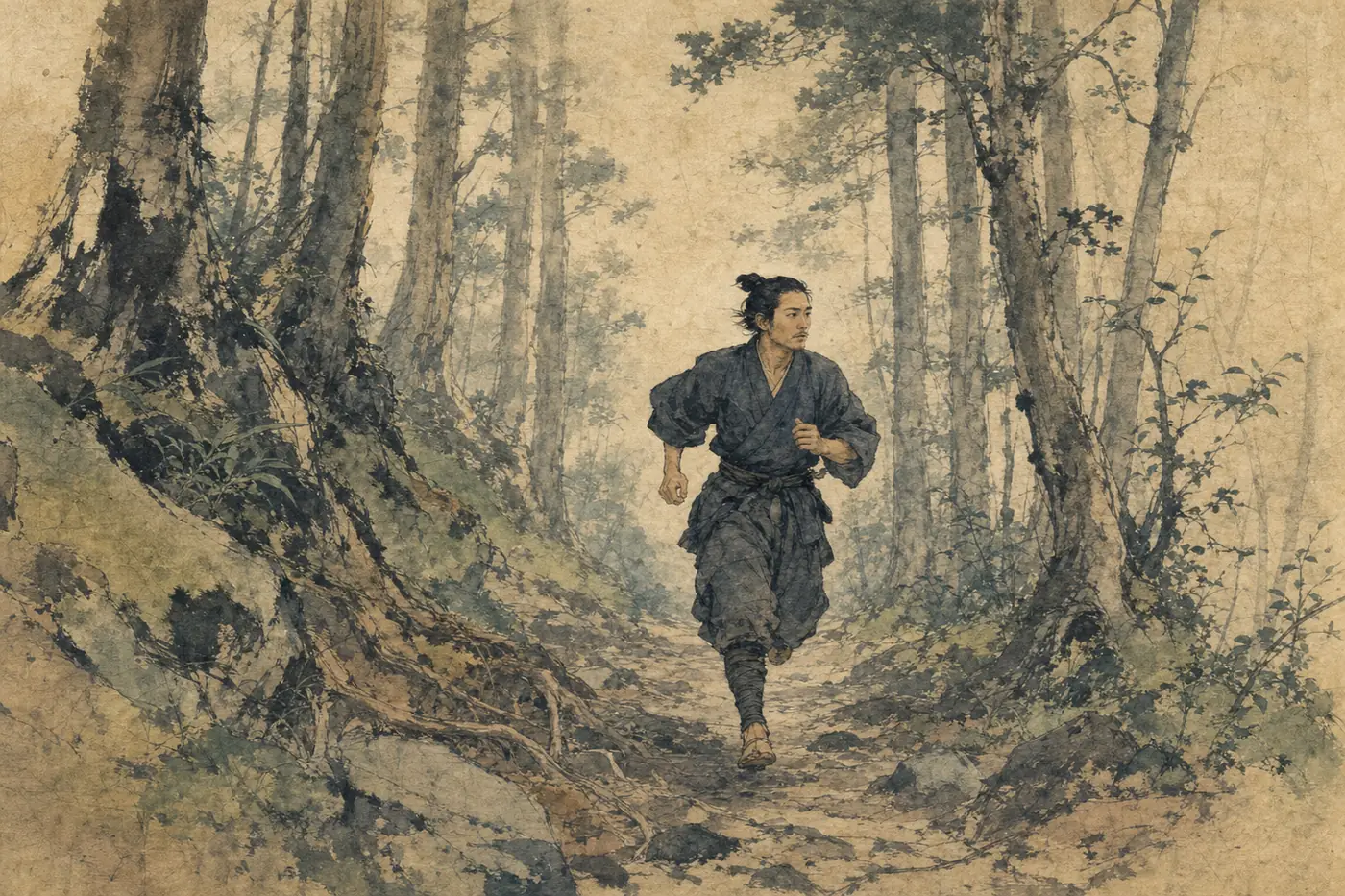
Body Training
Chapter 3, 11 articles
- Taijutsu
No belts, no trophies, no rules. Taijutsu is the foundation of ninjutsu, a natural way of fighting built for survival, with movements that follow earth, water, fire, and wind.
- Combat Rules
The best fight is the one that never happens. Three rules of ninjutsu, from mental training to mastery of the body, and nine pointers for when a fight cannot be avoided.
- Combat Factors
Flow, rhythm, breathing, distance, and intention decide how a fight ends. Nine factors of taijutsu, from nagare to ito.
- Jūnantaisō
In ninjutsu, strength comes from flexibility. Jūnantaisō, the conditioning training of the ninja, restores the elasticity of muscles and tendons and keeps the body healthy into old age.
- Training Factors
Ninety minutes of forest running a week, lightning reflexes, the strength for a throw, and joints that give. Endurance, speed, strength, and flexibility decide a fight.
- Body Weapons
Forehead, elbow, thumb, fingertips, heel – in ninjutsu every part of the body becomes a weapon against muscles, tendons, and bones.
- Toughening Up
Strikes against trees, fingers driven into buckets of sand and gravel – this is how the ninja hardened their body weapons until they barely felt pain.
- Atemite
About 250 spots on the body are sensitive to pressure and blows, and 69 of them can paralyze or kill. A map of the most important target zones.
- Kamae
Five stances in three seconds. In ninjutsu, kamae are not rigid poses but an expression of inner attitude and part of natural movement.
- Ukemi
Jumping off a truck, vaulting a wall, diving to the ground to dodge a bullet. The first thing ninjutsu teaches is how to roll and fall.
- Shinobi iri
Silent across wooden floors, through shallow water, flat on the ground like a salamander. These walking and running techniques let the ninja move unheard.
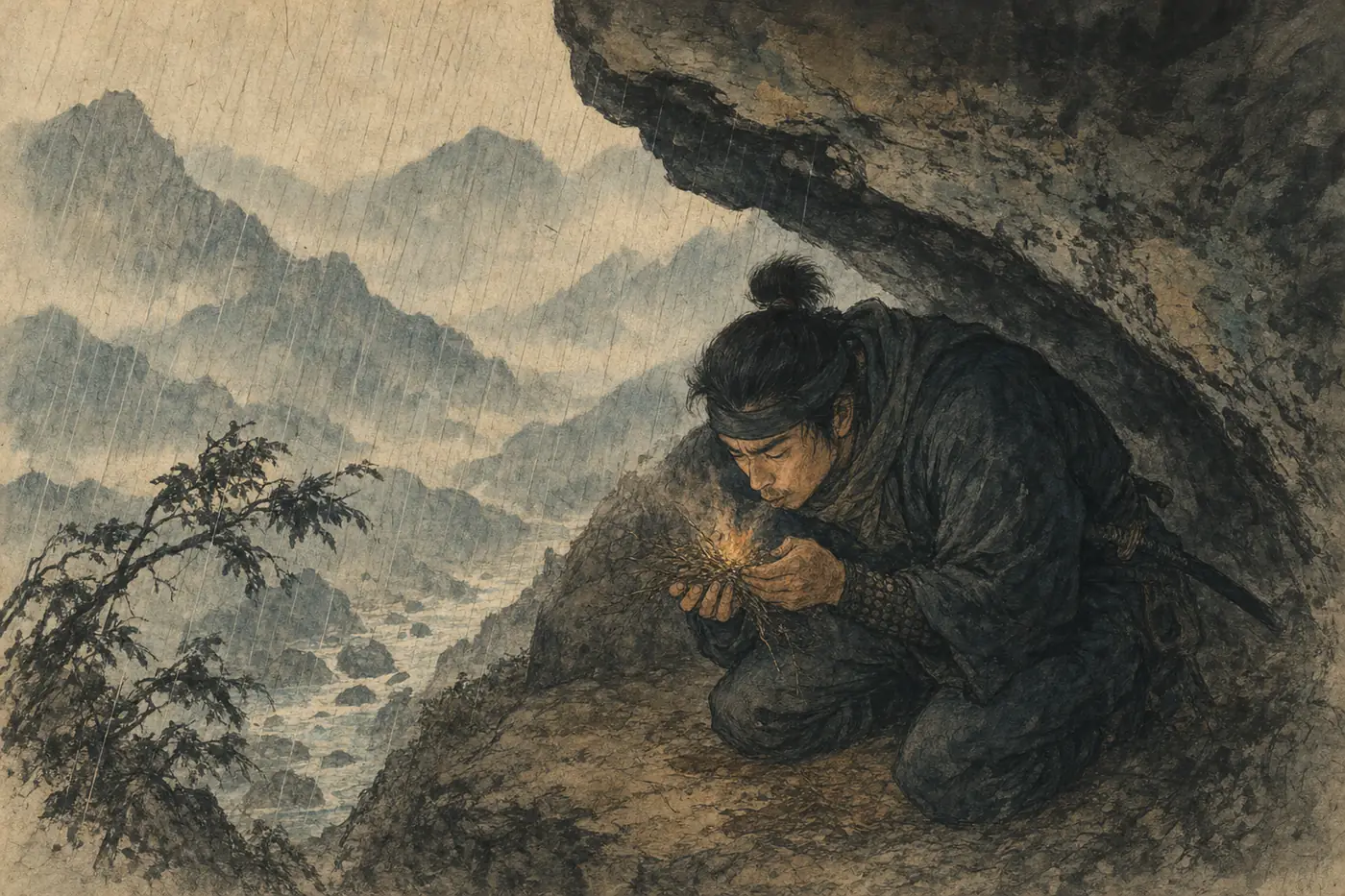
Weapons & Tools
Chapter 4, 8 articles
- Weapons
Iron caltrops, hook spears, blowguns, wooden cannons – to a ninja, every weapon was a tool. A selection from the ninja arsenal.
- Water Tools
Folding boats, breathing tubes, swim fins – with their water tools the ninja moved quickly over and under water and through swamps, leaving armored samurai far behind.
- Burglary Tools
Into any fortress, out of any prison – that was the ninja’s reputation. For it they carried tools for sawing, drilling, and digging.
- Climbing Tools
Ladders to throw, fold, or stretch across chasms, ropes of women’s hair, claws for hands and feet – this is how the ninja got up trees, across ravines, and into castles.
- Fire Tools
In houses of wood and paper, fire was the greatest danger. The ninja used it to spread panic – and to see in the dark.
- Ninja Clothing
Not pitch black, rarely masked, often no special suit at all: what the ninja actually wore, and what each piece was for.
- Miscellaneous Equipment
Telescope, compass, medicine case, demon mask, even a glider: what the ninja carried on their missions besides weapons.
- Inrō – Travel Pharmacy
Sleeping gas from powdered rats, leeks on a gunshot wound, 30 sesame seeds against thirst: what the ninja mixed in a travel pharmacy and packed for a mission.
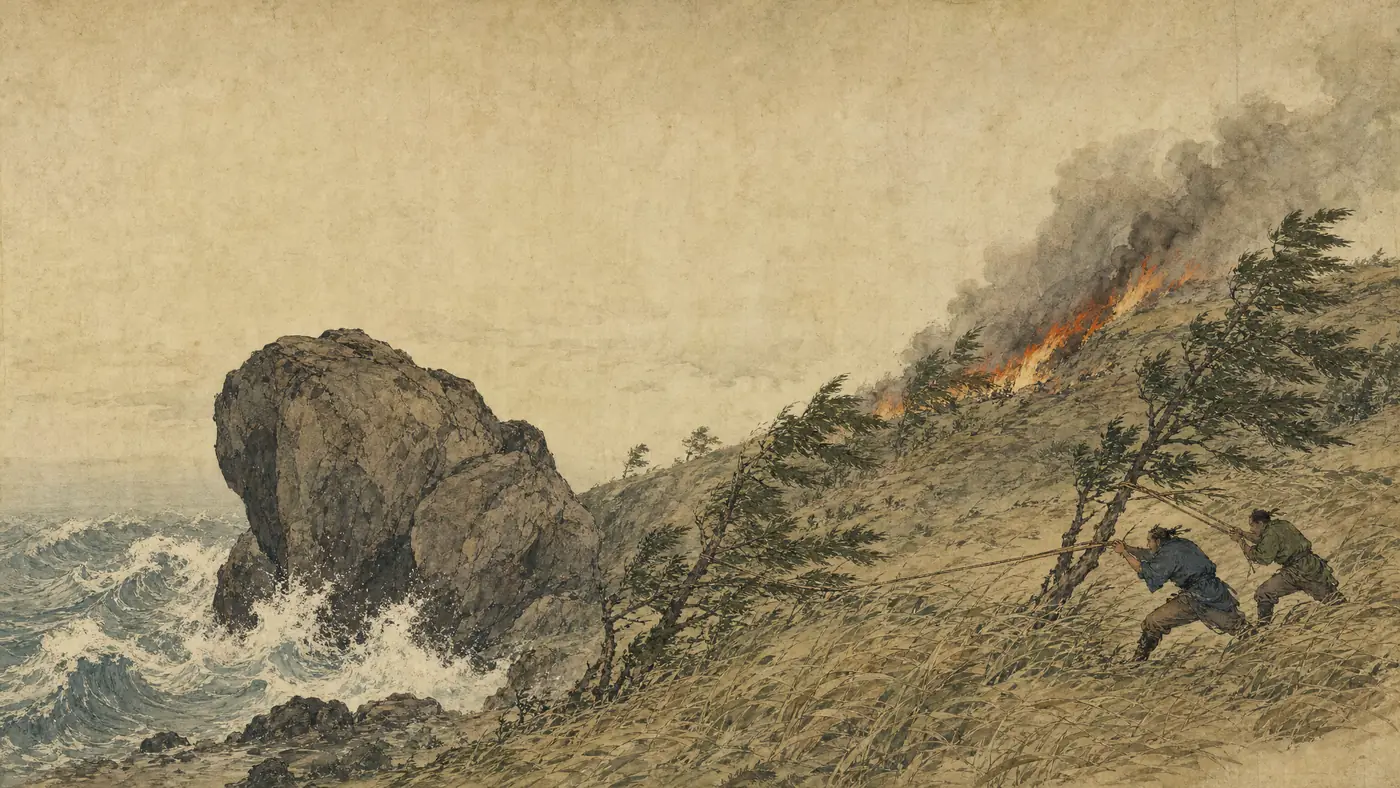
Mental Powers
Chapter 5, 10 articles
- Mikkyō
There is no such thing as coincidence, the mikkyō teaches. How this tantric doctrine traveled from India through China to Japan, and why the ninja used it to sharpen their powers.
- Sanmitsu
Thought, word, and deed are the three secrets of mikkyō. How mandala, mantra, and mudrā embody them, and why folding your hands into a sign won’t heal a wound.
- Kuji-in
Of 81 hand and finger signs, the ninja used nine. They work only with the right spiritual and religious attitude and after years of practice.
- Godai
Earth, water, fire, wind, and void. Through the five elements of the godai, the ninja sought to understand how creation fits together – and with it, themselves.
- Gogyō
Wood becomes fire, fire becomes ash. The gogyō, the Daoist theory of the five elements, describes how the elements bring each other forth and hold each other in check.
- Tenchijin
Change the world, change yourself, or change only how things look. With the principles of heaven, earth, and human, the ninja judged every situation from several angles.
- Consciousness and Spirit
In the ninja’s teaching, everything in the universe vibrates, from a stone to a thought. The mind interprets these vibrations and links consciousness and body.
- The Seventh Sense
The subconscious pushes toward a decision, a premonition stirs: the ninja took such feelings seriously and trained them until they could sense danger.
- Enlightenment
Scientist, doctor, merchant, or warrior – any path can lead to enlightenment. The ninja chose the path of the warrior and followed it for life.
- Daoism
Water flows, clouds drift, the willow bends under the snow. Daoism taught the ninja to move with the course of things instead of against it.
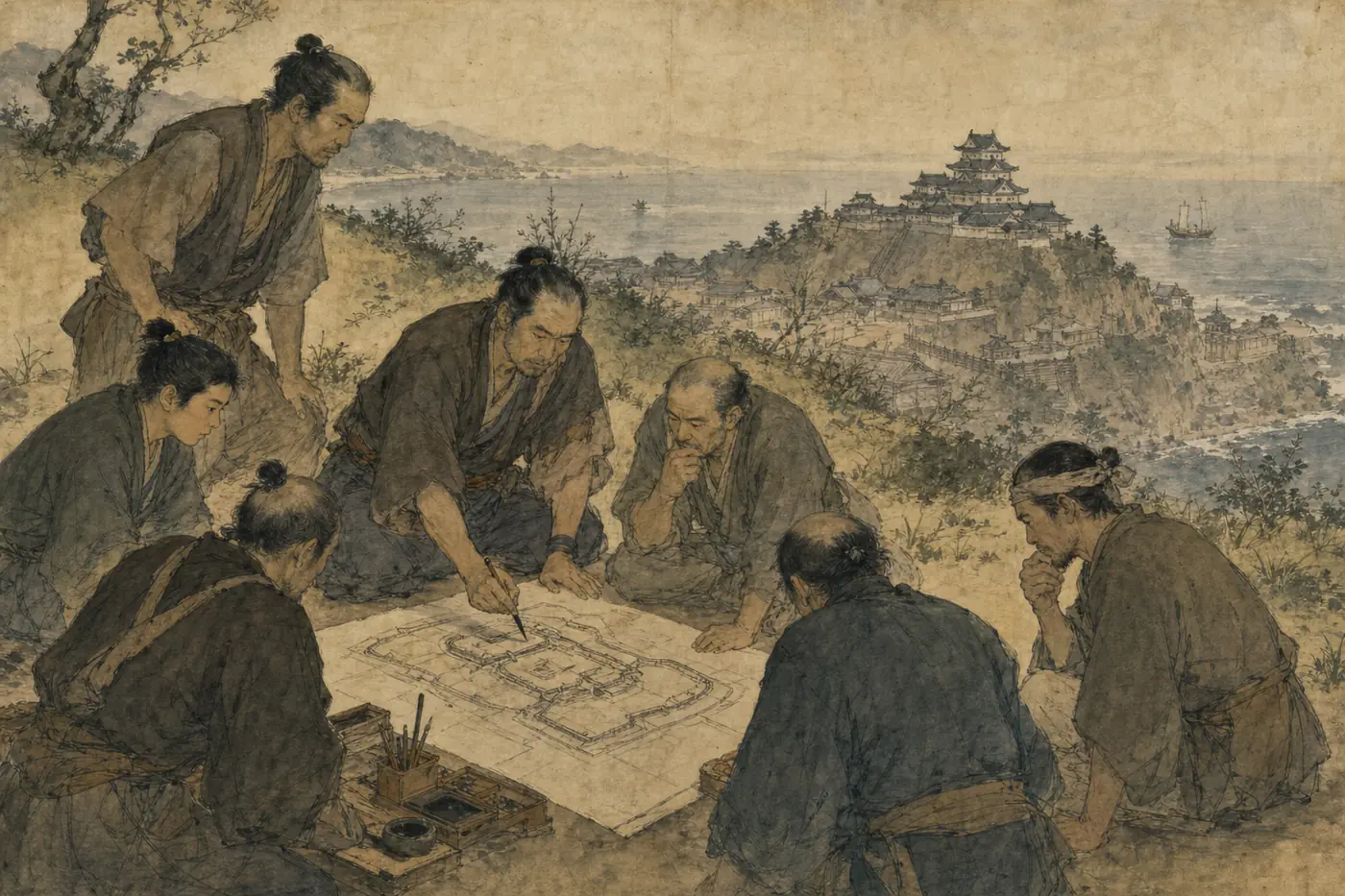
Strategy & Tactics
Chapter 6, 8 articles
- Gotonpō
A river, a tree, a fire, a hole in the ground, a mirror – after a mission, the ninja used the five elements to get away.
- Onshin jutsu
The character nin in the word ninja means to endure, to persevere, and to conceal. Hiding is the core of ninjutsu – and an art with firm rules.
- Shichi hō de
The opponent sees them but does not notice them. With shichi hō de, the seven ways of walking, ninja used the filter in every mind to vanish into the crowd.
- Chōhō
A single spy can shorten a war by years. In the Middle Ages, reconnaissance and espionage were the ninja’s main field of work – and a core part of their training.
- Heihō
A mock attack, a coat flapping in the wind, a guard who would rather sit by the fire in the rain – with tricks like these, ninja crossed enemy territory and got into guarded castles.
- Bōryaku
Arrowhead, crane wing, fish scale – eight battle formations of the Japanese generals, and why a ninja had to know them too.
- Tōiri
A messenger meant to be caught, a turncoat who waits years for a signal – the tōiri tactics prepared for war while there was still peace.
- Chikairi
Forged letters, a mock assault, a beggar at the castle gate – with the chikairi tactics, ninja sabotaged the enemy and slipped into castles once a conflict began.
The Legacy of the Ninja
Chapter 7, 13 articles
- Takamatsu Toshitsugu
At 13 he beat a professional sumō wrestler; in China he dodged a Shaolin master for two hours. Takamatsu Toshitsugu was Hatsumi Masaaki’s teacher and the man the Bujinkan is named for.
- Hatsumi Masaaki
For fifteen years he traveled to his teacher Takamatsu every weekend. Today Hatsumi Masaaki heads the Bujinkan, where he teaches nine schools as one.
- Bujinkan
Some 250 Ryū once existed in Japan. The Bujinkan unites nine warrior and ninja schools – Hatsumi Masaaki named it in honor of his teacher Takamatsu.
- Guidelines of Bujinkan
Patience, self-control, personal responsibility, and a membership card – the rules Dr. Hatsumi Masaaki set for everyone who wants to train in the Bujinkan.
- Togakure-Ryū
A lost battle, a flight to Iga, and a teacher in the mountains – this is how Togakure Daisuke’s School of the Hidden Door began.
- Gyokko-Ryū
Its movements took shape at the Tang court, its first sōke lived in the Hōgen era. The Gyokko-Ryū is the oldest of the Bujinkan’s nine traditions.
- Kukishinden-Ryū
Takamatsu reconstructed the densho of the Kukishin-Ryū and in return was allowed to found a branch school – the Kukishinden-Ryū, the School of the Nine Demon Gods.
- Shinden-Fudō-Ryū
No dōjō, no training equipment – in the Shinden-Fudō-Ryū, students trained on trees and in bamboo forests. The School of the Unmoved Heart dates from the mid-12th century.
- Gyokushin-Ryū
Long taught in secret, geared more to espionage than to combat, and known for the throwing rope – the School of the Jeweled Heart.
- Kotō-Ryū
A sword that turns the sun into the opponent’s eyes, a gaze aimed between the eyebrows, five finger holes in the bark of a tree. The Kotō-Ryū and its unusual methods.
- Takagi-Yōshin-Ryū
A willow bends, a tall tree breaks. With this lesson from his father, Takagi Oriemon Shigenobu built a school whose philosophy is yielding.
- Gikan-Ryū
Its founder is said to have broken a sword blade with a single blow. The Gikan-Ryū has no kata, and Hatsumi has not yet taught it in public.
- Kumogakure-Ryū
Ninja in armor, sometimes behind a demon mask, and a hook spear that carried Sarutobi Sasuke from tree to tree. The Kumogakure-Ryū, the School of the Hidden Cloud.
Rules & Philosophy
Chapter 8, 6 articles
- Essence of Ninjutsu
Self-protection, endurance, and a benevolent heart. What Takamatsu Toshitsugu and Hatsumi Masaaki see as the core of ninjutsu, and why fighting technique alone is not enough.
- The Rules of the Ninja
Scouting without killing, truth and lies in alternation, mastery of every weapon. The ten rules Hatsumi Masaaki draws from the experience of the ninja.
- The 5 Commandments of the Ninja
Letting sadness, anger, envy, and hatred pass like smoke. Five commandments from Hatsumi Masaaki for times when you are sad, sick, wounded, or in despair.
- 18 Training Levels
From knowing yourself to forecasting the weather. These are the 18 systems in which the ninja of the Togakure-Ryū strove to improve.
- Ninpō Sanjūrokkei
Twice eighteen makes the 36 military strategies – 18 basic martial arts and 18 special skills in which the ninja trained.
- Ninja no Hachimon
Eight gates decide whether a Ryū is a ninja art. What the ninja no hachimon requires, and why six of the nine Bujinkan schools are warrior Ryū.
Appendix
After the chapters, 4 articles