Ninja no Hachimon
Eight gates decide whether a Ryū is a ninja art. What the ninja no hachimon requires, and why six of the nine Bujinkan schools are warrior Ryū.
- Chapter
- 8, Rules & Philosophy
- Sections
- 1
- Reading time
- 1 min
The Eight Gates of the Ninja
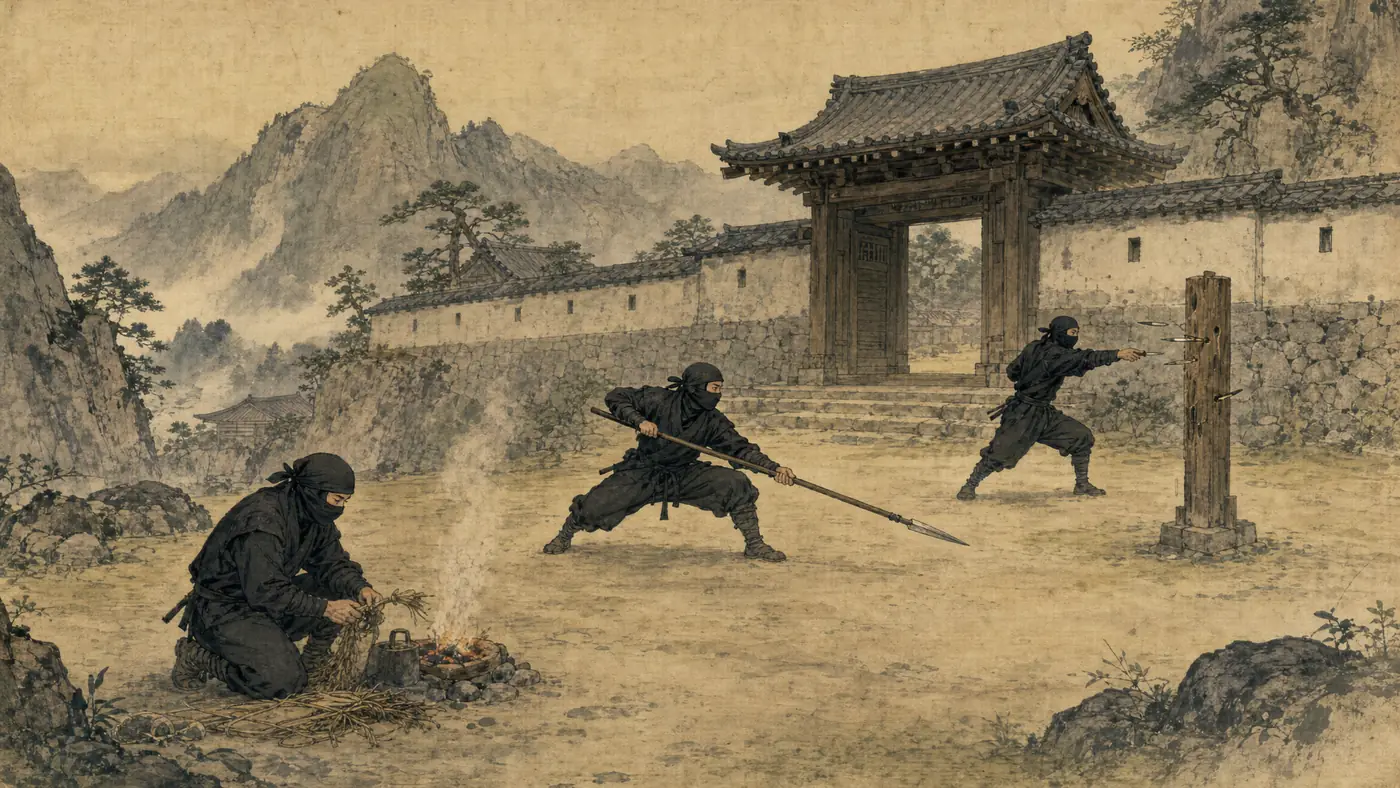
A ninja Ryū must teach eight fields to truly be a ninja art. This definition is called the ninja no hachimon, the eight gates of the ninja.
- Ninja no kiai jutsu: energy discharge
- Ninja no taijutsu: body art
- Ninja no ken: sword fighting
- Ninja no yari: spear fighting
- Shurikenjutsu: blade throwing
- Ka jutsu 火術: fire, smoke, and explosives
- Kyomon: observation, common sense
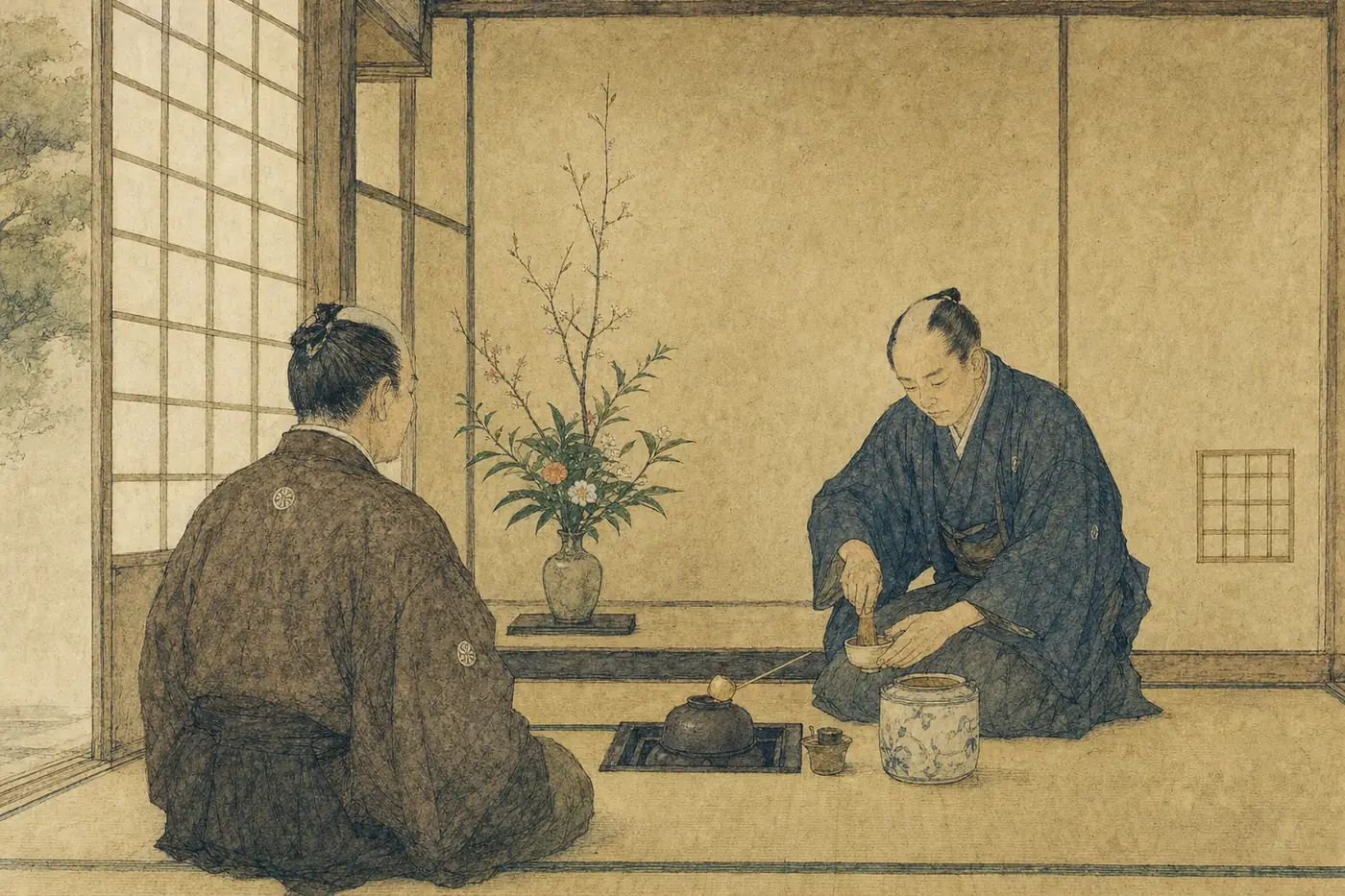
- Yūgei: social arts such as the tea ceremony or ikebana
Ninja Ryū and Warrior Ryū
It follows that many arts that claim to be ninja arts are in fact warrior Ryū. In the Bujinkan (武神館), three ryūha 流派 are pure ninja Ryū: the Togakure-Ryū (戸隠流) Ninpō, the Gyokushin-Ryū (玉心流) Ninpō, and the Kumogakure-Ryū (雲隠流) Ninpō.
The other six ryūha are warrior Ryū. That does not make them any less effective. Even in earlier times, ninja learned other ryūha to improve their skills.
Many famous ninja, such as Hattori Hanzō, were respected warriors in their region. Only a few people knew that they were also ninja.