Heihō
A mock attack, a coat flapping in the wind, a guard who would rather sit by the fire in the rain – with tricks like these, ninja crossed enemy territory and got into guarded castles.
- Chapter
- 6, Strategy & Tactics
- Sections
- 4
- Reading time
- 3 min
Infiltrating Enemy Lines
To break through enemy lines and reach the area of operations, a ninja needed to be resourceful.
A favorite tactic was the mock attack (ennyū no jutsu). A squad of ninja or samurai staged an assault, and while every soldier rushed to meet it, the ninja slipped into the fortress unhindered. At other times ninja disguised themselves as simple foot soldiers. These were mostly recruited from farmers, nobody knew who they were, and so the ninja could move among them unchallenged.
Sometimes a whole squad of ninja hired on with the enemy as mercenaries and walked straight into the area of operations. When the castle in Iga was being built, ninja mingled with the workers. They found out the fortress’s weak points, and that knowledge later helped them to victory.
Strategies for Infiltration
To get into an enemy castle or camp, the ninja first had to wait for the right moment (nyūkyo no jutsu, “the art of invasion”
). A good moment came when the enemy force had left the camp for a campaign: the ninja climbed over the ramparts and opened the gates for their own troops. Another chance arose when a camp had stood for only a few days, or when new troops had just arrived. Nothing was properly organized yet, and it was easy to blend in.
The daily routine of a camp opened gaps too. Ninja used cooking and mealtimes, the feeding of the horses, and rest periods to gain access.
The night after a celebration, after an accident or a death, or after a sick person had recovered was especially suitable. After a battle, won or lost, it was also easy to get into the camp.
The weather played into their hands. They attacked in rain, snow, and storms, and on moonless nights.
Even the enemy’s sleeping habits went into the plan. People sleep more deeply in spring and summer, so ninja preferred to attack then. In fall and winter most people sleep lightly, so they avoided those seasons. They also knew that older people need less sleep, and that fat people usually sleep well and thin people badly.
Next, the ninja scouted the weak points of the enemy’s defenses (monomi no jutsu, 物見の術). They preferred rooms that were easier to break into, usually those far from the kitchen, dining hall, or storeroom. They looked for back doors and unused rooms such as guest rooms.
The Human Weak Point
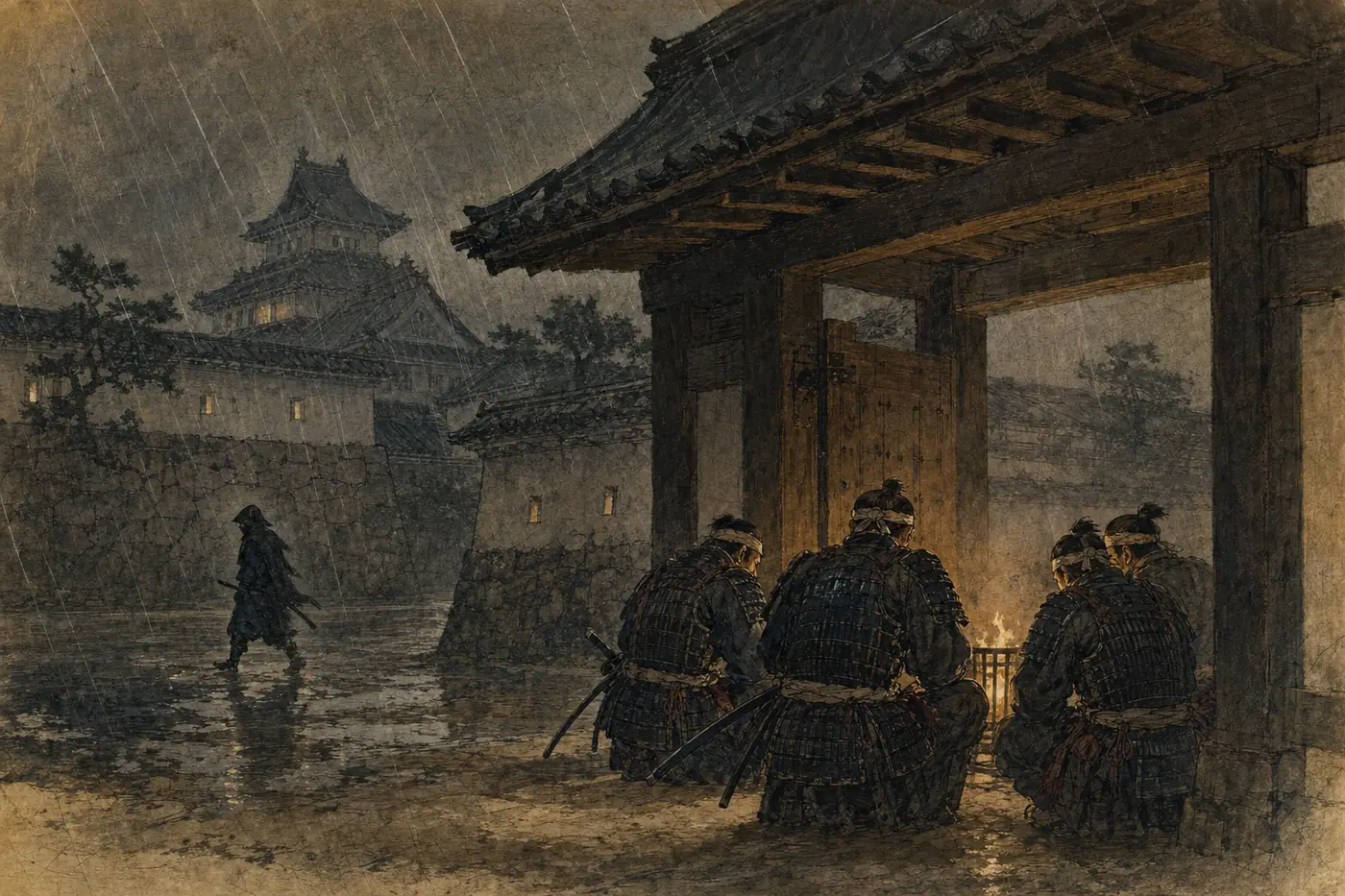
The people defending a castle had their weak points too (nyūdaki no jutsu). Ninja turned the laziness, stupidity, and other quirks of the guards to their advantage. In rain or cold (ametori no jutsu, “the art of the birds in the rain”
), guards liked to stay away from their posts or did their duty half-heartedly. And they usually welcomed any distraction from the boredom of a watch.
Sometimes a ninja threw an object over a guard’s head to catch the guard’s attention (yōji gakure no jutsu). This went on until the guard no longer cared to check every snapping twig. Animal sounds added to the confusion.
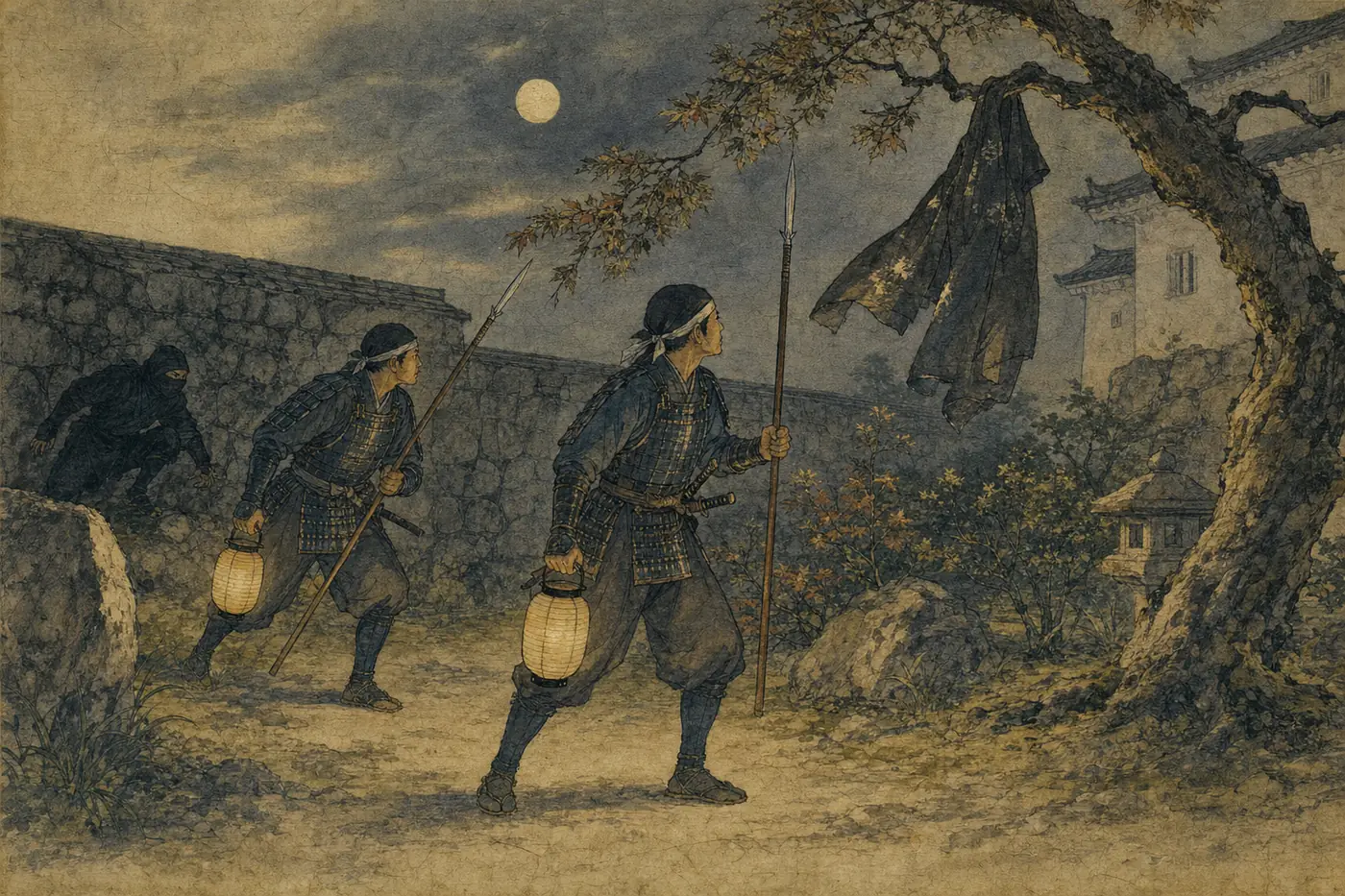
A popular trick was to hang a coat outdoors. In the wind it made noise and drew the guards toward it, while the ninja crept on unseen.
Avoiding Human Contact
On night missions, ninja avoided every human encounter. A clash slowed them down, cost time, and could make the whole mission fail. If they did have to kill a guard, they tried to carry the body into the thick branches of a tree.
Ninja liked to exploit people’s superstitions (kyōnin no jutsu). Devil masks, fire-breathing, supposedly evil animals such as snakes, toads, rats, or ravens – they used anything that gave them an advantage.
When their task was to spread fear and terror among the enemy, they preferred to strike from ambush, hit hard, and withdraw. This wore down the troops’ morale.
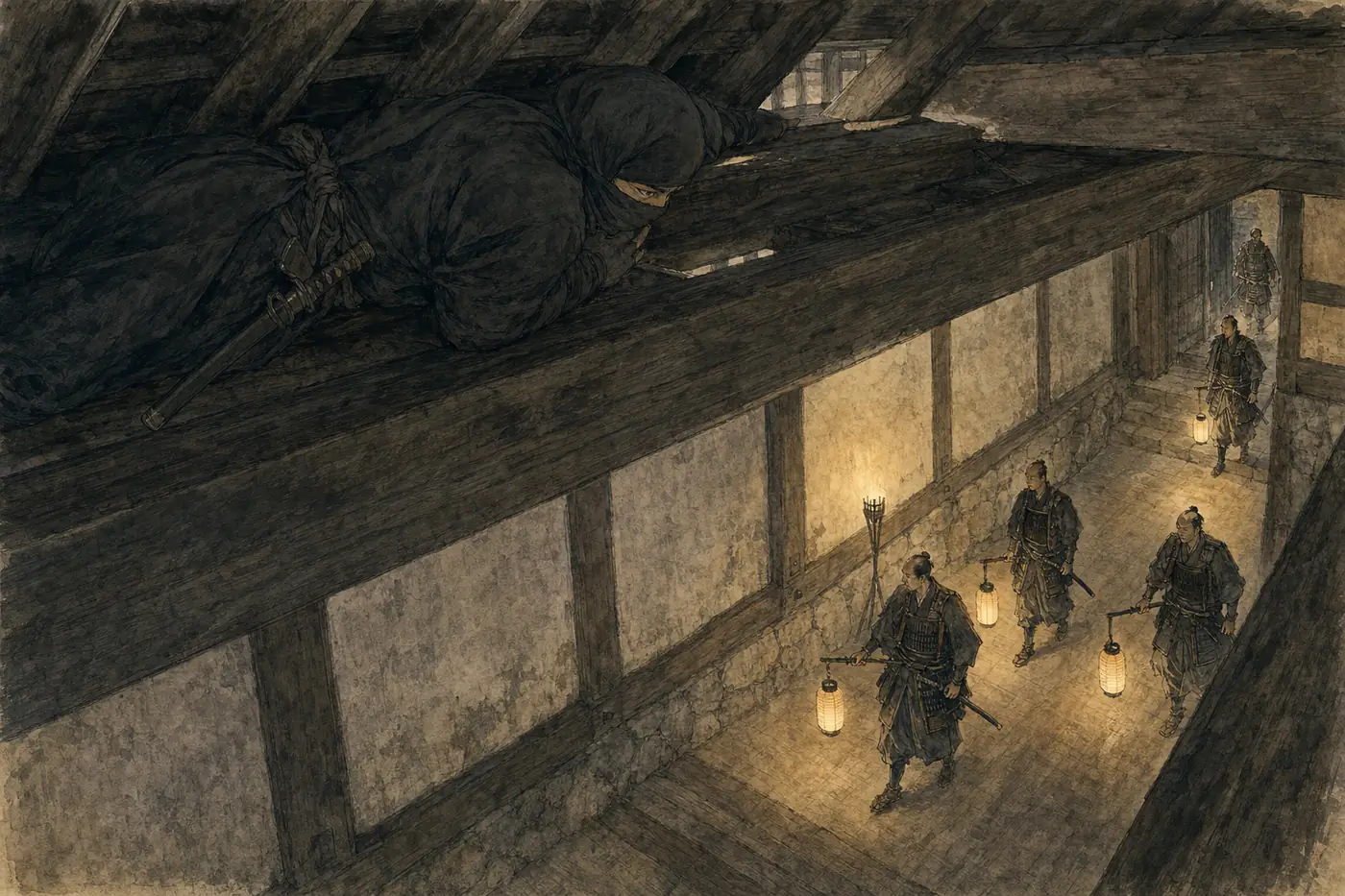
Often a ninja hid in the castle’s rafters before the battle and waited. Then the ninja set fires in several places, sabotaged ammunition depots and storerooms, fouled the wells, and destroyed equipment.